Blog
INIChain Computing Power Development — Technical Research Overview


INIChain Computing Power Development
Technical Overview and Network Analysis
Introduction: InitVerse and Its Position Within the Proof-of-Work Landscape
Following Ethereum’s transition to Proof-of-Stake, the Proof-of-Work (PoW) blockchain sector has continued evolving as developers and miners explore new architectures capable of supporting long-term scalability and practical applications. While several projects have introduced alternative approaches to performance and consensus design, newer networks are increasingly focusing on privacy, interoperability, and computational efficiency.
InitVerse (INI) represents one such emerging initiative. Designed as a PoW-based blockchain with Ethereum Virtual Machine (EVM) compatibility, the project combines traditional mining participation with privacy-oriented computation features. Its technical structure has drawn attention from independent miners, infrastructure operators, and researchers interested in next-generation blockchain frameworks.
Like many fair-launch PoW networks, INI follows a mining-based distribution model without pre-mining allocation. Token issuance occurs through network participation, supporting decentralized access while encouraging ongoing computational contribution.
Core Technology Architecture
At the protocol level, INIChain introduces a framework referred to as TfhEVM, integrating fully homomorphic encryption (TFHE) concepts with EVM compatibility. This design aims to allow smart contracts to process encrypted data while maintaining execution compatibility with existing Ethereum-style development tools.
Such an approach may support applications where privacy is important, including enterprise data processing, financial workflows, and healthcare-related systems. Rather than exposing raw information on-chain, encrypted computation seeks to expand blockchain usability in regulated or data-sensitive environments.
The network consensus mechanism, known as VersaHash, incorporates adaptive cryptographic parameters intended to balance efficiency and security. Dynamic adjustment mechanisms are designed to respond to changes in network participation and computational demand, supporting stable block production under varying operating conditions.
Current Network Metrics (January 2026 Snapshot)
Based on publicly available explorer data, the INI mainnet currently demonstrates steady network activity:
Network Hashrate: Approximately 7.2 TH/s
Network Difficulty: Around 44.16 EH
Block Height: Over 1.7 million blocks produced
Total Transactions: More than 4.36 million recorded transactions
Observed Market Price: Approximately USD 0.125 (subject to market fluctuation)
These figures indicate that the network remains in a relatively early stage of growth compared with long-established PoW ecosystems. Early-stage networks often experience evolving participation levels as infrastructure and developer adoption expand.
Importantly, INI maintains compatibility with CPU- and GPU-based mining, allowing broader participation rather than limiting access exclusively to specialized hardware.
Network Security and Hashrate Context
Network hashrate forms the foundation of PoW security. A higher cumulative computational contribution increases resistance to malicious activity while improving overall stability.
For illustration, aggregate network power at current levels represents the equivalent of tens of thousands of consumer-grade GPUs operating simultaneously (approximate comparison used only for conceptual understanding). Compared with mature networks operating at significantly higher scales, INIChain’s present capacity reflects an early development phase rather than a saturated mining environment.
Early-stage participation can present opportunities for experimentation and ecosystem growth, though outcomes depend heavily on future adoption and market conditions.
Difficulty Adjustment and Block Production
INIChain targets an average block interval of approximately 10 seconds, positioning it between slower legacy networks and ultra-fast experimental chains. This design attempts to balance:
Transaction confirmation speed
Network scalability
Predictable issuance timing
Mining difficulty adjusts dynamically to maintain stable block production as computational participation changes. Such mechanisms help preserve network consistency while accommodating growth in total hashrate.
Mining Pool Development and Ecosystem Participation
Mining pools play an important role in PoW ecosystems by reducing reward variability for individual participants. Within the INI ecosystem, YatesPool has emerged as a visible contributor, providing operational dashboards and performance monitoring tools for miners.
The presence of organized mining infrastructure often signals ecosystem maturation, as pooled participation allows smaller operators to engage without relying solely on solo mining outcomes.
Electricity pricing remains a key operational factor. Energy efficiency and local power costs can significantly influence mining sustainability, and operators are encouraged to evaluate expenses carefully before participating.
On-Chain Activity and Ecosystem Usage
With more than 4.36 million recorded transactions and consistent recent activity, INIChain demonstrates measurable on-chain utilization. Active transaction flow suggests the network is being used beyond purely mining incentives.
As decentralized applications develop, increased network usage may contribute to broader ecosystem engagement. However, adoption trends depend on developer participation, user demand, and ongoing technological progress.
Economic Modeling and Operational Considerations
Mining participation is ultimately influenced by operational feasibility. Revenue modeling typically considers:
Individual hashrate contribution
Total network hashrate
Block issuance rate
Token market value
Electricity expenses
Mining pool service fees
A simplified estimation model may be expressed as:
Estimated Daily Output = (Individual Hashrate ÷ Network Hashrate) × Network Issuance − Operating Costs
It is important to emphasize that such models rely on fixed assumptions. Real-world outcomes vary continuously due to market volatility, network growth, and operational conditions. Mining hardware and participation should therefore be evaluated as long-term infrastructure decisions rather than guaranteed income sources.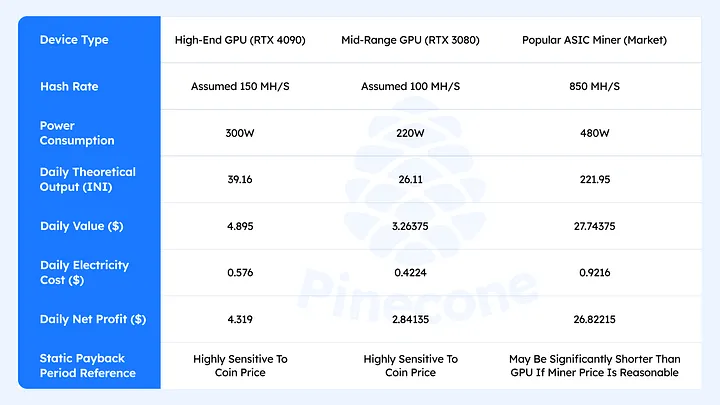
Responsible Participation and Transparency
As blockchain infrastructure evolves, transparency and informed decision-making remain essential. Participants are encouraged to verify information through official channels and remain cautious of unofficial sources.
Official information and updates are available at:
For inquiries or support:
Email: support@pineconeinibox.shop
Email: compliance@pineconeinibox.shop
Email: privacy@pineconeinibox.shop
Conclusion
INIChain represents an example of how modern PoW networks are attempting to combine traditional mining participation with advanced computational concepts such as encrypted smart contract execution and adaptive consensus design.
While still developing, the project highlights broader industry trends toward efficiency, privacy integration, and accessible participation. As with any emerging technology ecosystem, long-term outcomes will depend on adoption, technical execution, and market dynamics.
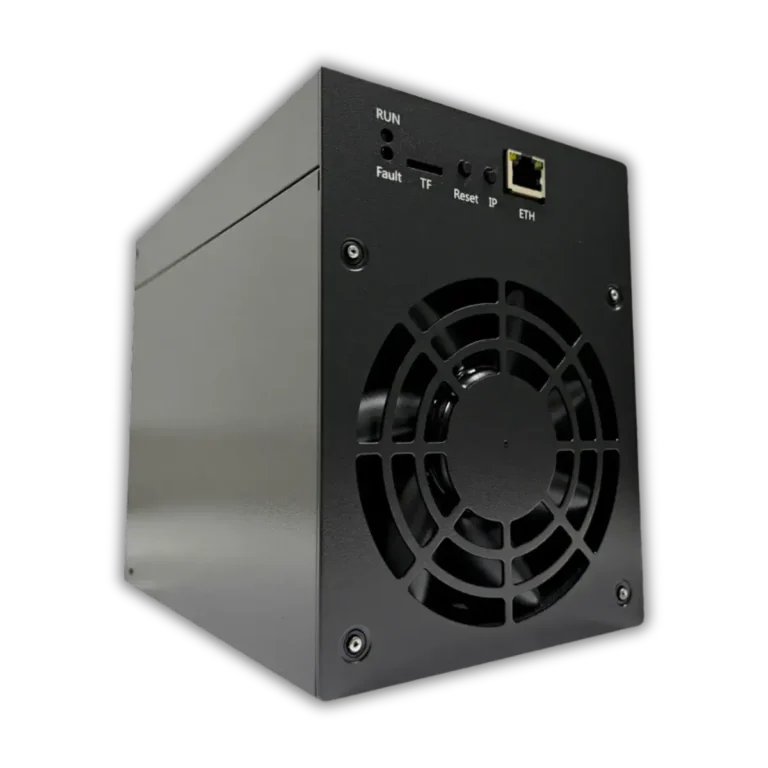
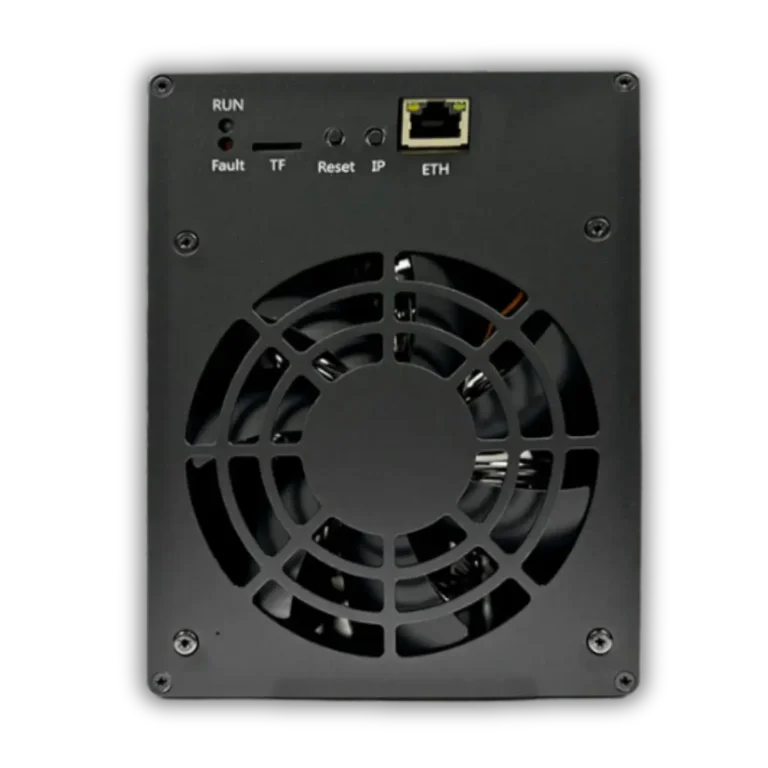
Pinecone Matches INIBOX (850Mh/s)
Price range: $1,950.00 through $2,300.00 Incl. TAX 🡅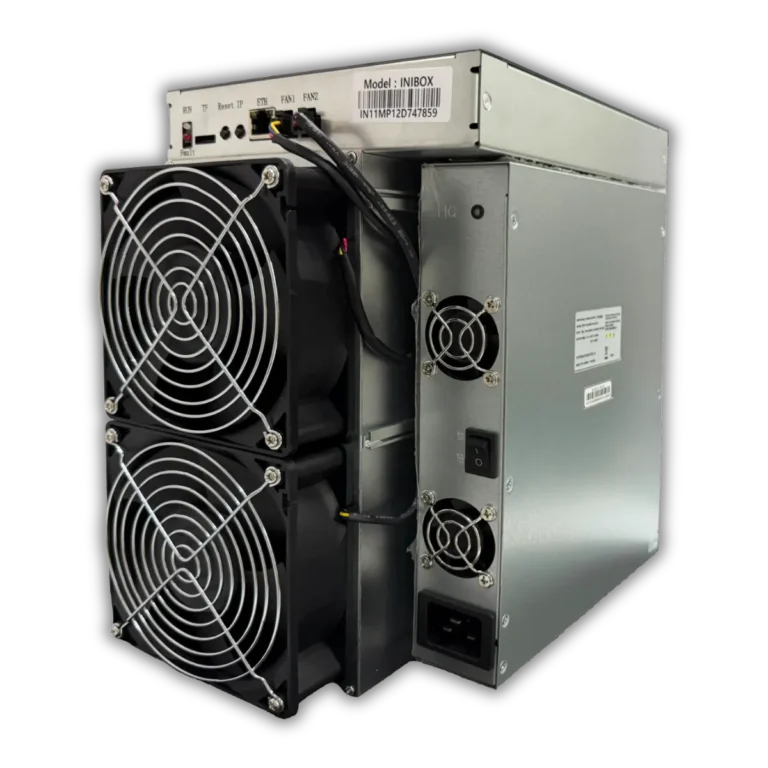
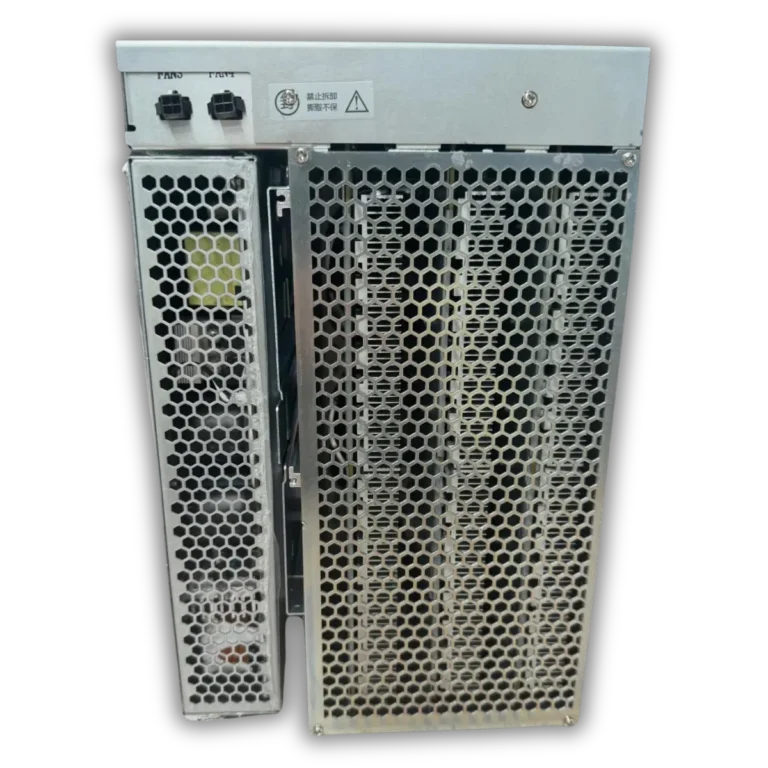
Pinecone Matches INIBOX PRO (2.4Gh/s)
Price range: $3,899.00 through $4,120.00 Incl. TAX 🡅